Squinching what is it?
In 1999, The Amazing Adventures of Spider-Man opened at Universal Studios Orlando. In the attraction, guests follow Spider-man around, fighting various villains. To transport guests to the stylized version of New York City, Universal Creative needed innovative technology. For the ride vehicle, Moog Inc, a company known for its hydraulic systems, was tasked with modifying an existing motion base design and putting it on wheels. Thanks to the brilliance of the one-of-a-kind ride vehicle, the 24-year-old attraction combines the best qualities of a dark ride and a motion simulator. Guests feel every sharp turn and collision, as well as the freefall from a skyrise.
The innovation of the ride vehicle isn't limited to movement. An arguably more important invention was made that is much less obvious. Each vehicle encapsulates a system that allows the precise tracking of its position. Allowing control over a vehicle's position provides greater safety for collision avoidance. However, Universal Creative cleverly used position tracking to simulate perspective. The vanishing point of the various projected sequences moves relative to the vehicle's position. Viewed from the right angle, the different planar projections through the attraction appear three-dimensional. Overall, the effect makes the attraction seem much larger than it is. Universal patented the technique and coined it as "squinching."
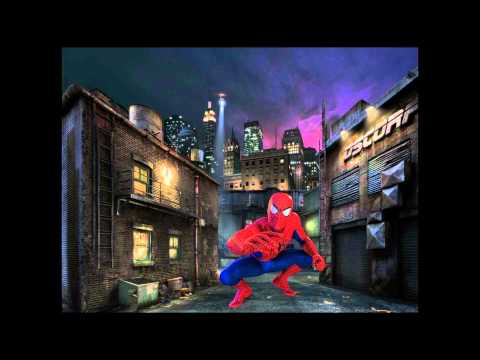
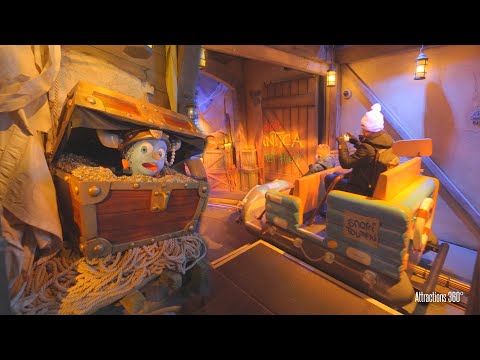
Squinching has been used on many Universal attractions to various extents since the original inception. One example is Transformers: the ride which heavily relies on this technique to show Autobots and Decepticons battling for the all-spark in a large military facility. Another effective example is the Jurassic World attraction at Universal Studios Hollywood which also uses this method to produce the illusion of a massive water tank containing an immense aquatic dinosaur that splashes guests. However, since Universal patent expired, squinching is now seen outside of Universal attractions. One recognizable instance is the ratatouille ride in EPCOT to give guests the perspective of a rat inside an immense kitchen. Europa Park uses the technique throughout their "Snorri Touren" attraction to create windows into cartoon underwater sea life. Squinching's permeance into other attractions proves its effectiveness as a method of creating larger-than-life ride scenes.
Despite the current revival of Squinching, this technique is the product of methods that have been around for hundreds of years. The distortion of perspective to create an illusion only visible from one viewing angle is known as "Anamorphosis". A notable example is Hans Holbein the Younger's painting The Ambassadors (c.1533). When viewed from the front, the painting depicts two men beside a peculiar shape. When viewed from a certain angle, the peculiar shape transforms into a skull.

The history of anamorphosis is broad and has endured for years. It's an effective optical illusion that has many applications. However, there are limited resources for creating media using "squinching." I aim to make a reference that artists can look to and encourage them to implement "squinching" in their projects.
How to Squinch
For an extraterrestrial-themed attraction, we need to cook up a ride film where a massive UFO comes swooping down inside a nondescript military base. But here's the kicker: we're making it look like the room goes beyond the screen's surface.
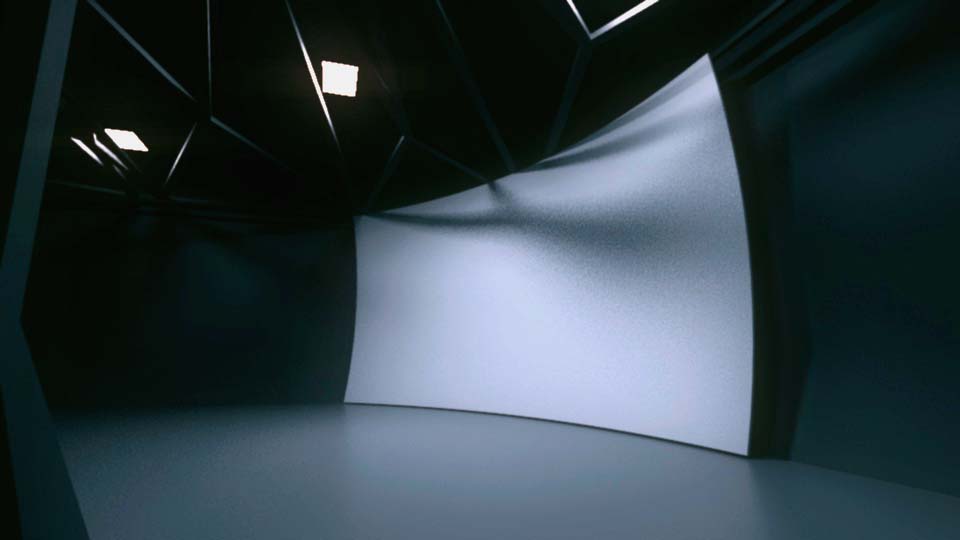
A highly accurate digital recreation is required to accomplish this illusion. Our goal is to find the data necessary with as little margin of error as possible. Fortunately, several preexisting technologies within the attraction allow us to gather that information easily.
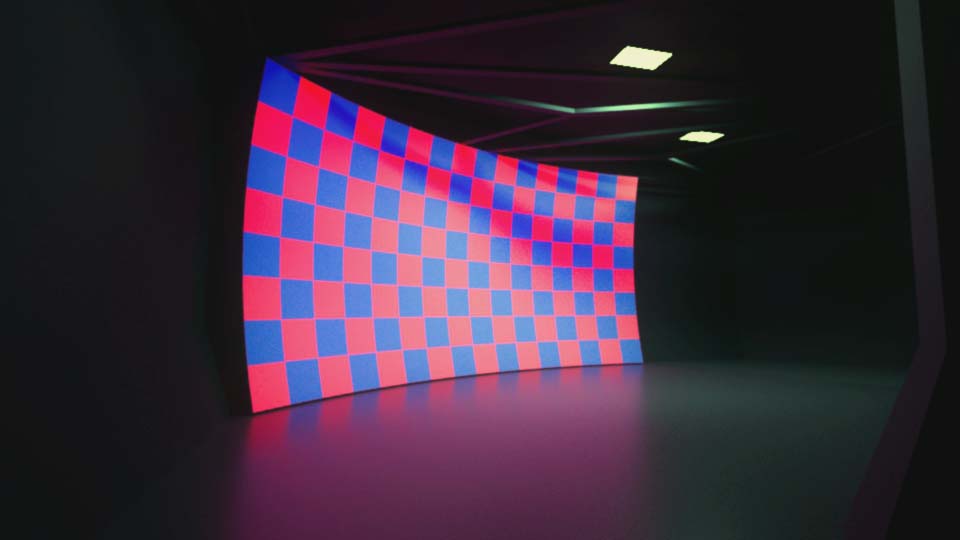
A highly accurate digital recreation is required to accomplish this illusion. Our goal is to find the data necessary with as little margin of error as possible. Fortunately, several preexisting technologies within the attraction allow us to gather that information easily.
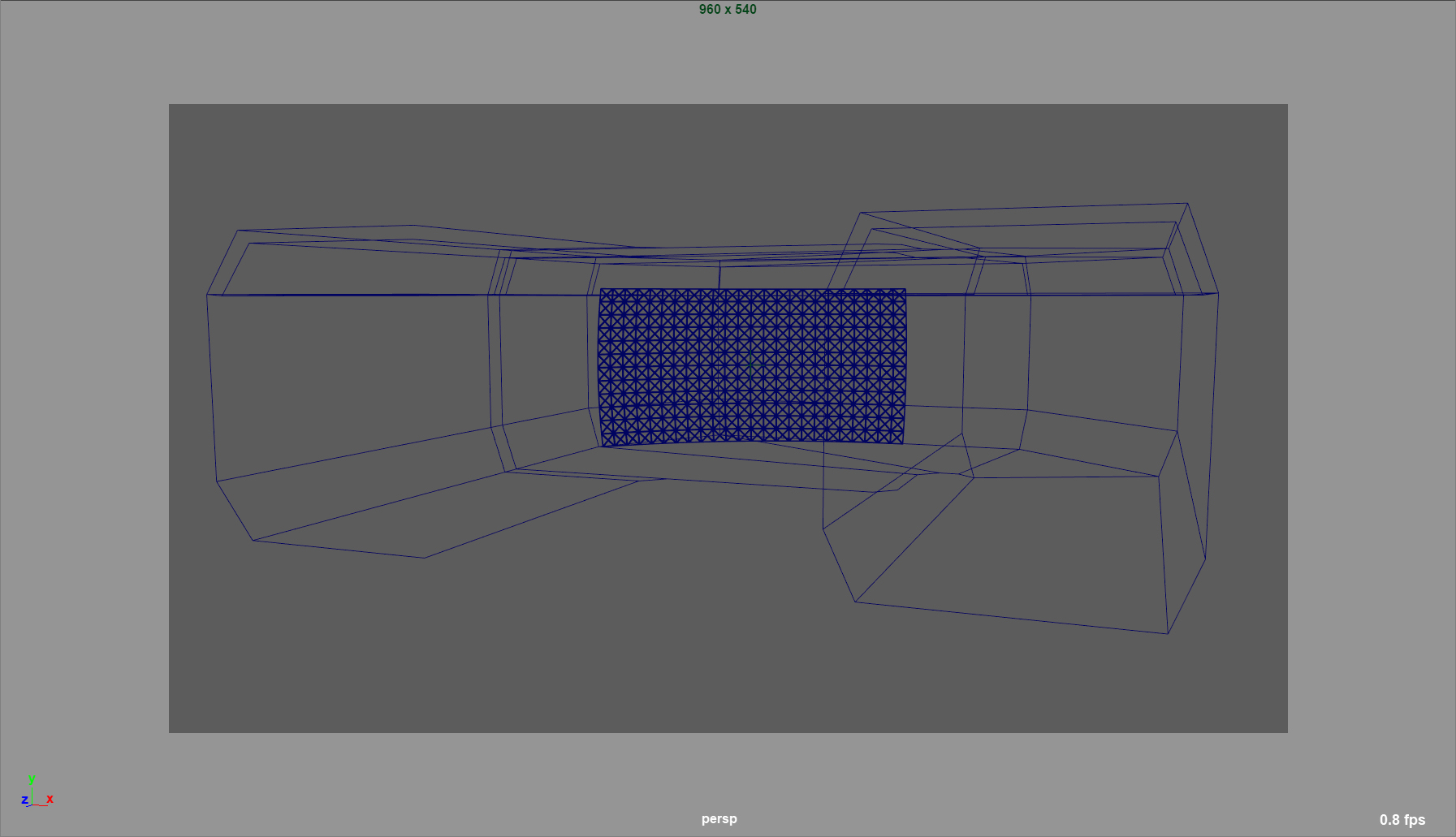
Now that geometry for the screen has been created, we need the motion path of the ride vehicle. Fortunately, this ride utilizes an automated guided vehicle. The local positioning system gives us accurate data that reflects the position and speed of the vehicle. The main render camera in our software package, in this case Maya, is constrained to follow the motion path with the correct speed.
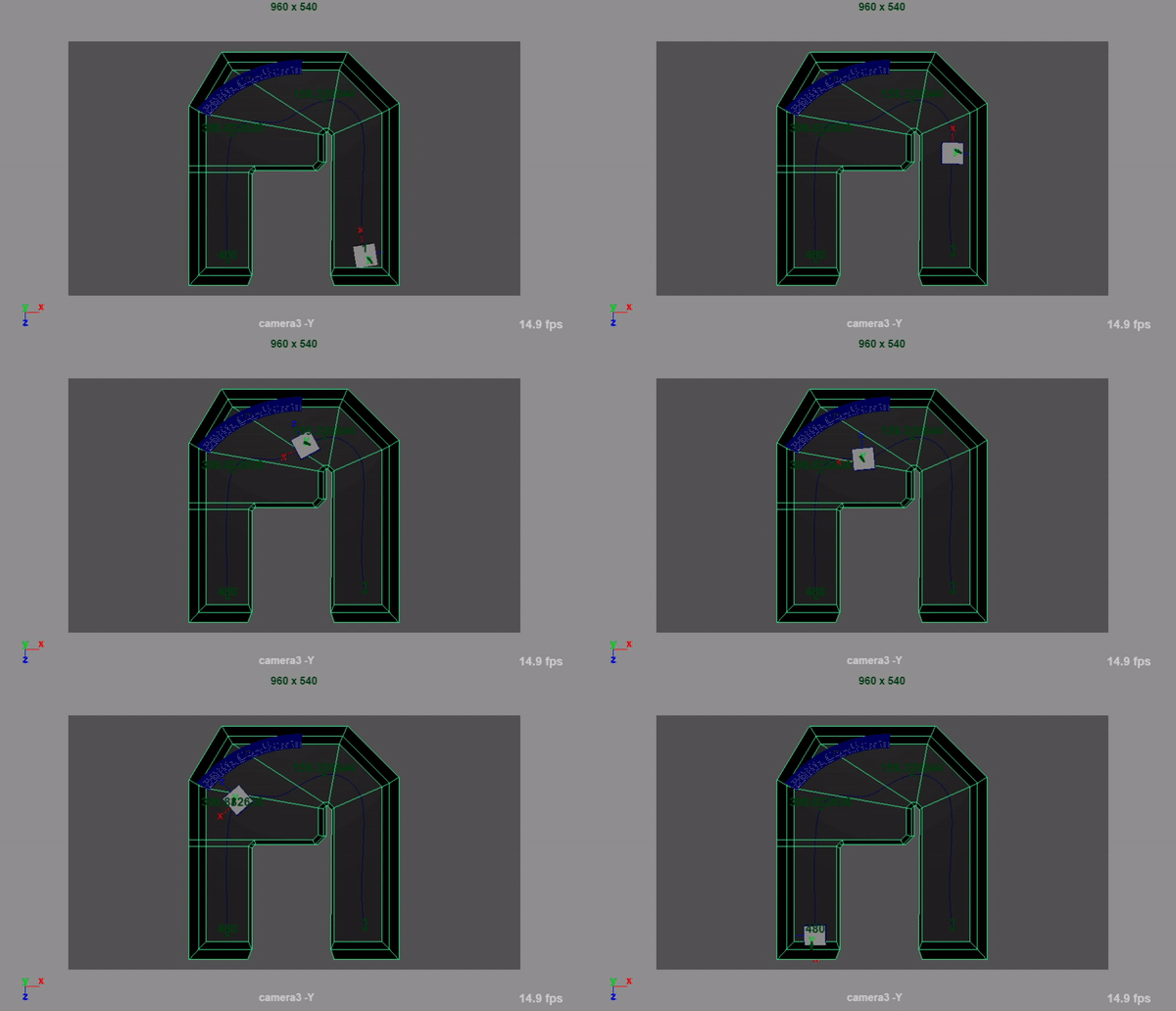
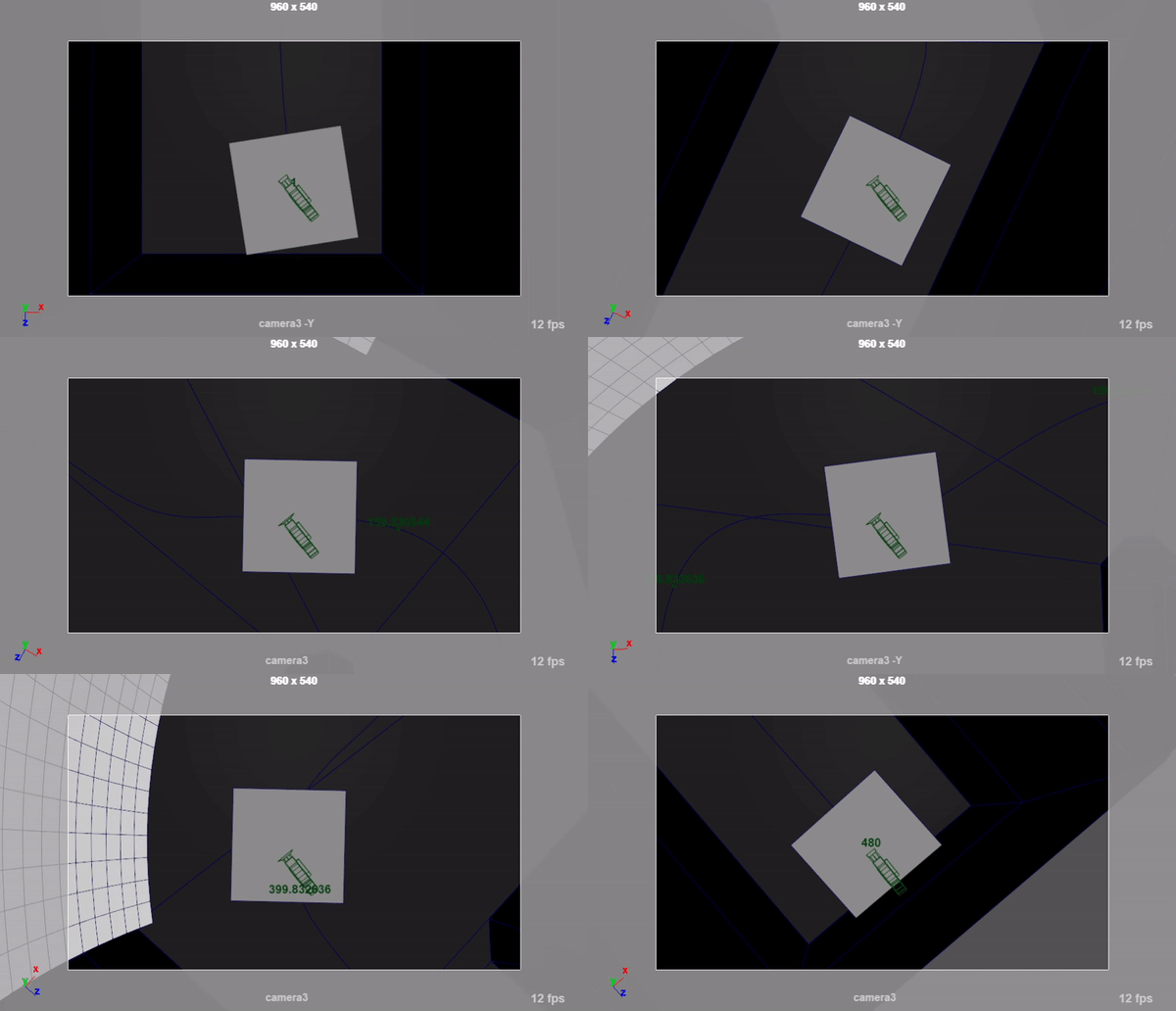
A final detail is the rotation of the render camera and its angle to the screen. The render cameras must be constrained to the exact center of screen for the effect to work.
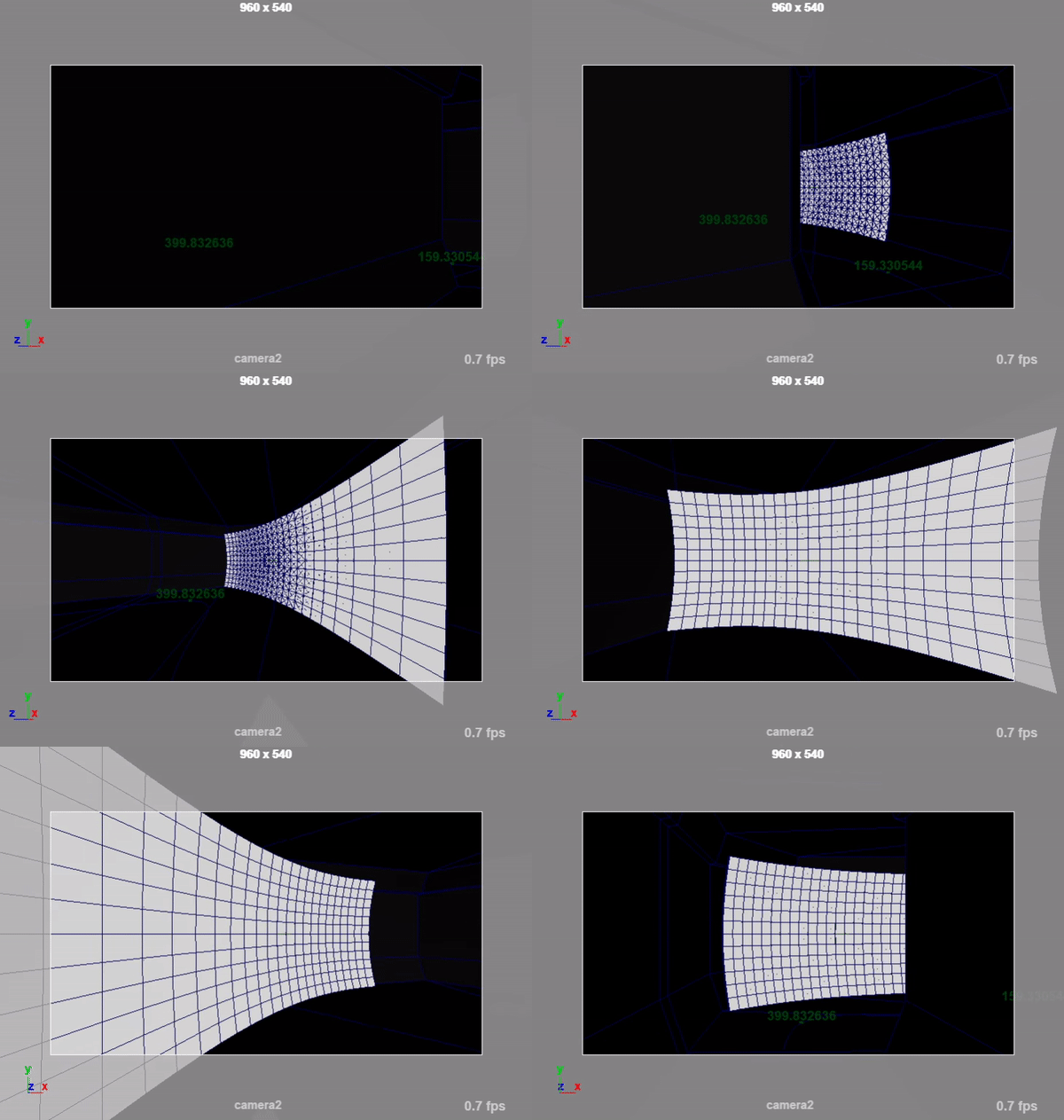
The VFX artists now must create the animated sequence of the ride scene. The artists must treat the screen geometry as a window and respect the confines of the scene.
Once the animation is completed, artists render the sequence from the moving render camera in 360 degrees and at an extremely high resolution. The resolution exceeds the projector resolution to preserve the pixel density once the frames are remapped to fit the screen.
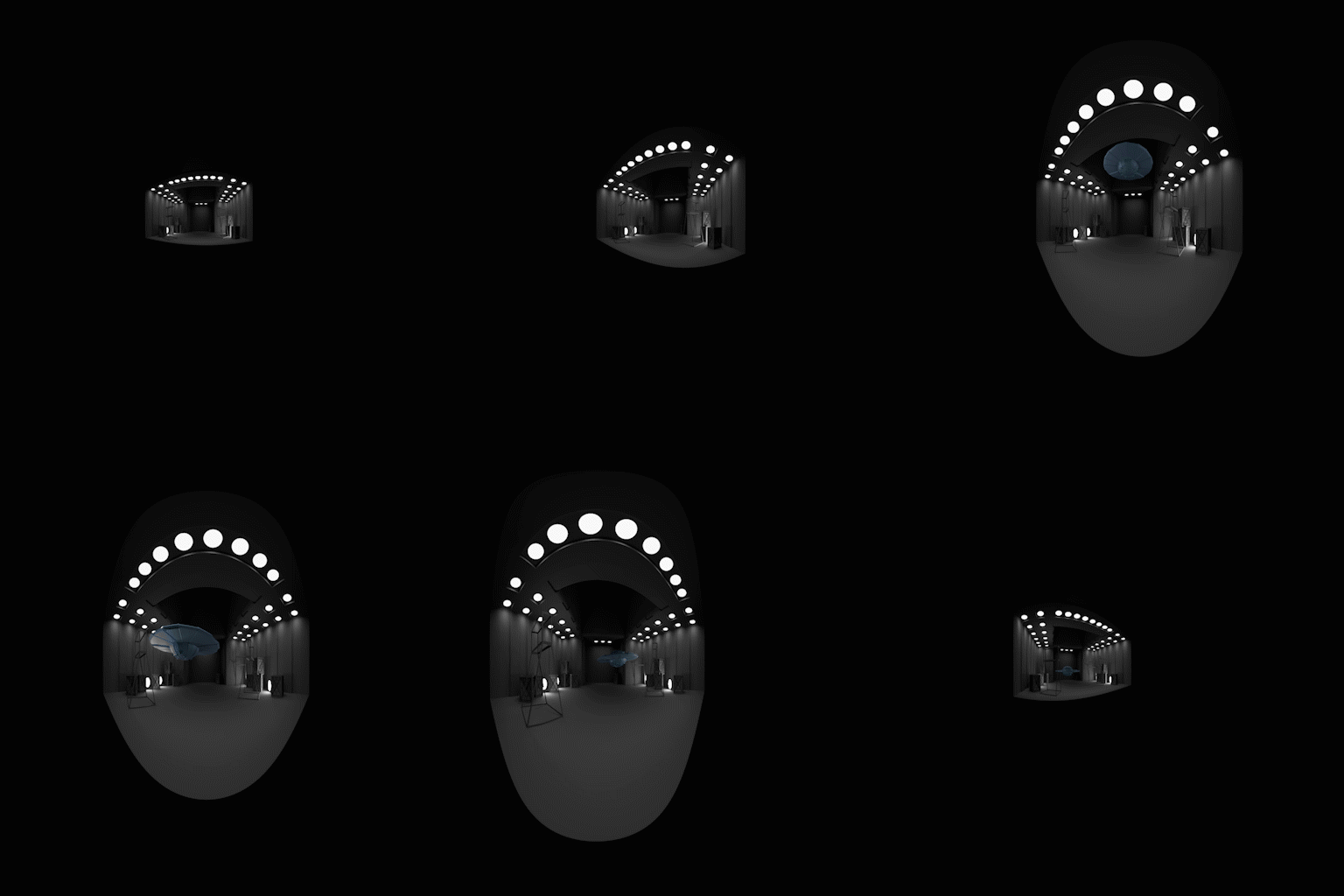
The high-resolution rendered sequence is remapped by spherically projecting the image sequence onto the surface geometry.
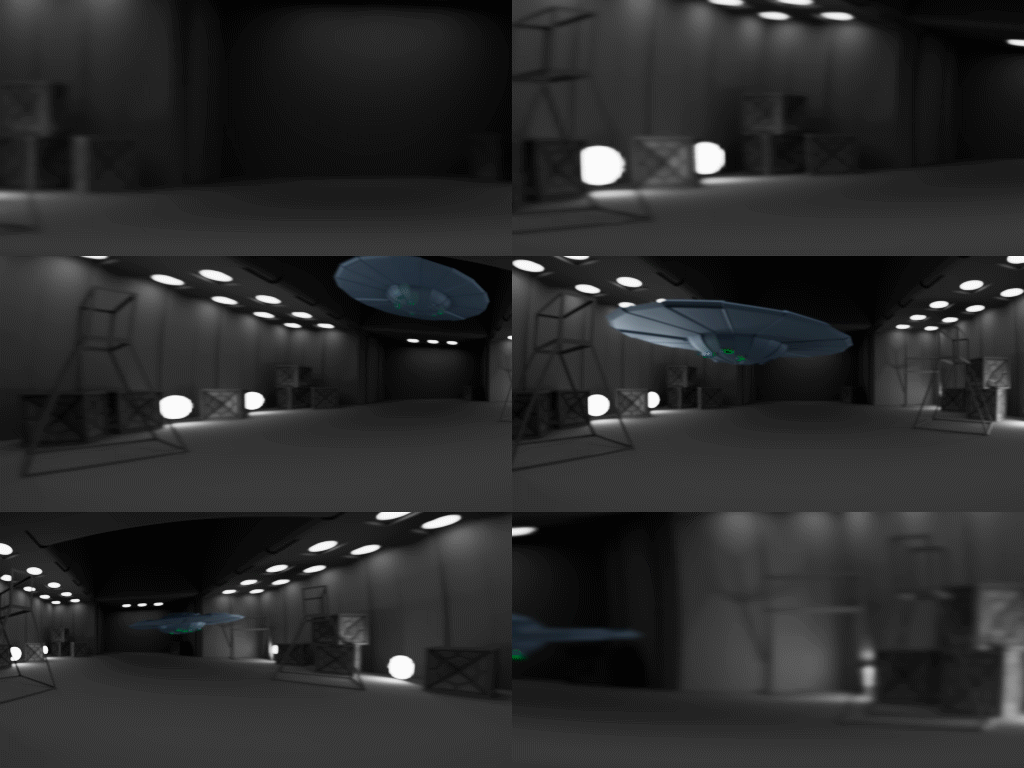
Despite the image looking distorted, when viewed from the right angle, the image looks three-dimensional.
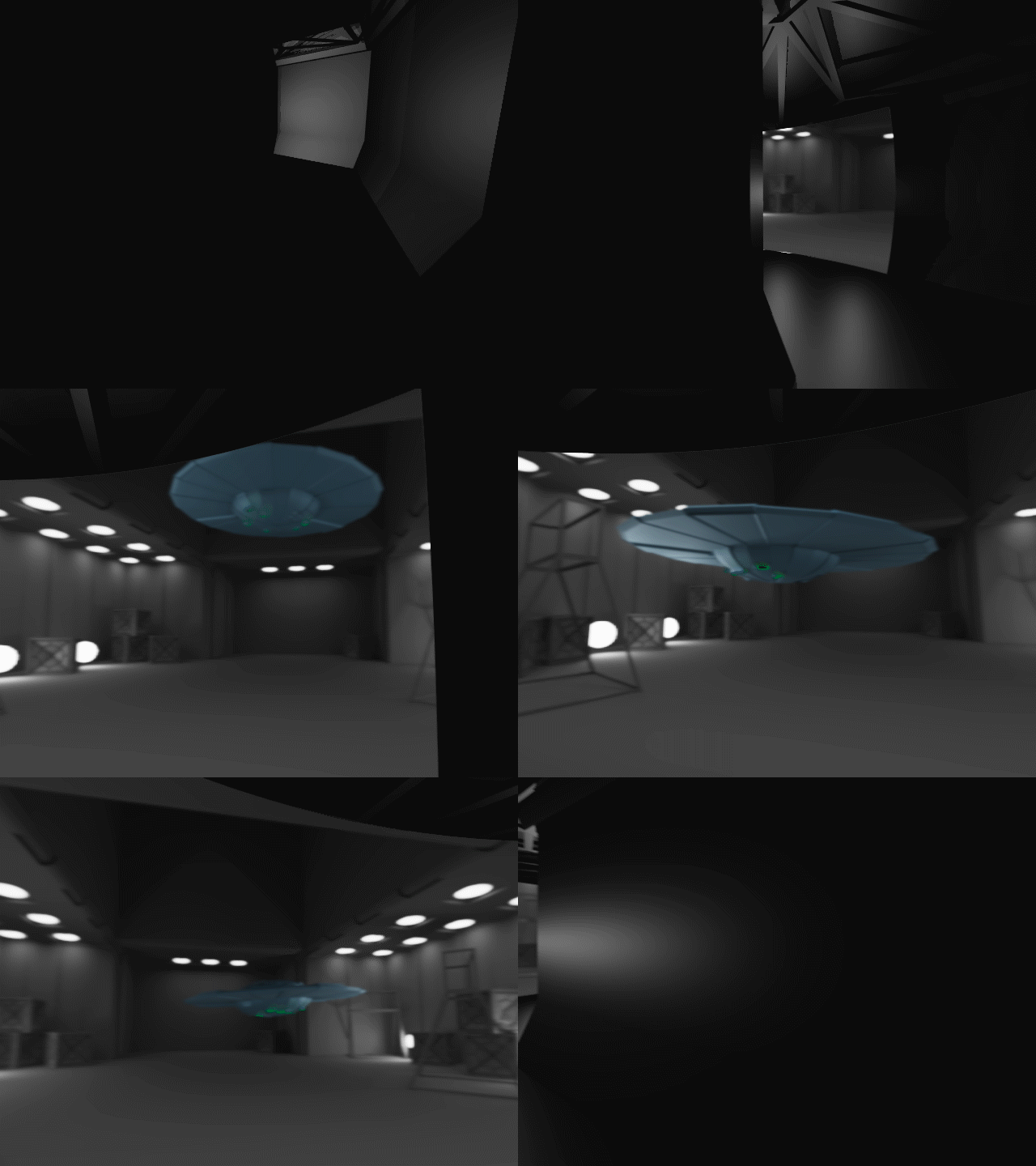
The effect is complete.